THE GRACE THOMAS FOUNDATION
PROGRAMME & IMPACT REPORT | APRIL 2024 – OCTOBER 2026
Building Informed Families for a Healthier Tomorrow
CAC Registration No. 7391994 • Registered 11 March 2024 • Abuja, Nigeria
Executive summary
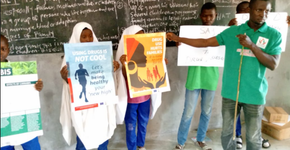
Since its inauguration on 30 April 2024, The Grace Thomas Foundation (TGTF) has implemented substance use prevention, mental health education, family-focused programming and community consultations in Taraba State and the Federal Capital Territory. Its activities have included outreach to school students, young adults, women affected by drug use and families, as well as online education and international civil society engagement.
This report records 12 programmes and engagements reported by TGTF for 2024–2026. All 12 have numerical attendance or reach estimates. Their combined reported activity-level count is at least 6,175 units, including 800 family attendances; this must NOT be interpreted as 5,920 unique individual beneficiaries. Figures are supplied by the Foundation and have not been independently audited.
Headline activity indicators
| Indicator | Reported result |
| Programmes and engagements listed | 12 |
| 2024 / 2025 / 2026 activities | 4 / 4 / 4 |
| School students reached in inauguration campaign | 3,000 |
| Families attending 2024 WOFADEP editions | 800 family attendances |
| Women engaged in May 2025 consultations | 80 attendances |
| Reported total across 12 quantified activities | 6,175+ mixed attendance/reach units |
What the evidence currently demonstrates
- Repeated implementation of community, school and family education programmes.
- Geographic delivery experience in Jen, Zing and Jalingo in Taraba State, and Abuja.
- Direct consultations with women who use drugs, creating opportunities for community-informed programme design.
- Growing emphasis on women’s mental health and family resilience through three WOFADEP editions.
- National NGO collaboration and international networking associated with CSW70.
Programme record — 2024
30 April 2024 | Inauguration: War Against Drug Abuse
Four secondary schools, Jen Community, Karim-Lamido, Taraba State. Reported reach: 3,000 students. School-focused prevention and awareness campaign.
24 June 2024 | Anti-Substance Drug Abuse Programme (ASAP)
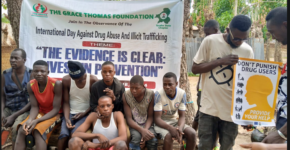
Three high-risk communities in Jen, Karim-Lamido, Taraba State. Reported reach: 300 youths and adults affected by drug and alcohol use. Observed the International Day Against Drug Abuse and Illicit Trafficking under the theme “The Evidence is Clear: Invest in Prevention.” Aims: improve substance use literacy, sensitization and outreach to people already experiencing substance-related challenges.
27 June 2024 | WOFADEP, first edition
Abuja, FCT. Reported attendance: 300 families. Women and Family Drug Education Programme emphasizing family awareness and prevention.
26 August 2024 | WOFADEP, second edition
Jalingo, Taraba State. Reported attendance: 500 families. Continued family drug education and community engagement.
Programme record — 2025
16 March 2025 | Youth Against Drug and Substance Abuse Movement (YASAM)
College of Education, Zing, Taraba State. Reported attendance: 500 students. Seminar emphasizing prevention, awareness and community responsibility.
6 April 2025 | Mental Health and Substance Abuse Advocacy Outreach
Government Day Secondary School, Tadohv, Zing, Taraba State. Reported reach: over 800 students. School-based education and prevention advocacy.
4 May 2025 | Community-Led Consultation
Dorowa Ghetto, Jalingo, Taraba State. Reported attendance: 30 women who use drugs. Dialogue on challenges and community needs.
7 May 2025 | Community-Led Consultation
Dogo Beer Parlour, Zing, Taraba State. Reported attendance: 50 leaders of women who use drugs communities. Discussion of women’s lived experiences and locally appropriate responses.
Programme record — 2026
January 2026 | Mental Health and Substance Use Prevention Webinar
Online via Google Meet, with a clinical psychologist. Reported attendance: over 40 participants. Covered mental health and substance use prevention.
26 February 2026 | WOFADEP, third edition
Jalingo, Taraba State. Theme: “Women at the Centre: Strengthening Families through Drug Education and Mental Health Literacy.” Reported attendance: over 400 women, boys and girls, including school-age and higher-institution groups.
6 March 2026 | International Women’s Day collaboration
Abuja, Nigeria. In collaboration with Christopher Oghogho Foundation, Betneely Charity Foundation, and Derek and Naomi Foundation. Theme: “Leave No One Behind.” Included women’s education and distribution of food and cash gifts. Reported attendance: 105 participants.
11 March 2026 | CSW70 high-level side event
“Global Women’s Partnership Without Borders,” Nigeria House, USA. International engagement associated with CSW70. Reported attendance: 105 participants.
Flagship programme spotlight: WOFADEP
The Women and Family Drug Education Programme (WOFADEP) has been delivered on three occasions: Abuja (27 June 2024; 300 families), Jalingo (26 August 2024; 500 families), and Jalingo (26 February 2026; over 400 participants). The programme evolved from family drug education to an expanded focus on mental health literacy and the role of women in strengthening families.
WOFADEP is a promising platform for future collaboration on women’s mental health, substance use prevention, protection awareness, and referral pathways. The Foundation should establish consistent attendance registers, pre/post learning assessments and referral tracking for future editions.
Reported reach — interpretation
The arithmetic sum of 12 supplied reach/attendance figures is 6,175 at the stated thresholds: 3,000 + 300 + 300 families + 500 families + 500 + 800 + 30 + 50 + 40 + 400 + 150 (International Women’s Day, Abuja) + 105 (CSW70 side event, New York). Since some figures are described as “over,” actual activity attendance may be higher. The sum mixes individuals with family units, may count repeat attendees and is not a valid estimate of unique individuals reached.
Programme themes and relevance
| Strategic pillar | Examples of reported work |
| Advocacy | School campaigns, tertiary education seminars, public awareness and CSW70 engagement |
| Prevention | ASAP, YASAM, WOFADEP and mental health education webinar |
| Intervention | Outreach to high-risk communities and community-led consultations with women who use drugs |
| Empowerment | Women’s community engagement and International Women’s Day support; systematic livelihood outcomes not yet documented |
Emerging lessons
- Families are a recurring entry point for drug education and prevention.
- Educational institutions offer scalable channels for reaching young people.
- Women who use drugs should help shape interventions affecting them.
- Programme expansion should be matched by stronger monitoring, safeguarding and referral arrangements.
Evidence limitations
These programme descriptions and counts are self-reported. The Foundation has not yet supplied participant registers, outcome surveys, independently verified figures, detailed financial data or case follow-up evidence. Accordingly, this report documents activities and reported attendance, not clinical recovery, reduction in substance use, sustained livelihood gains or measured mental health outcomes.
2027 measurement priorities
- Create standardized attendance registers that distinguish individuals, households/families, repeat participation and demographic categories.
- Use short pre- and post-session assessments to measure knowledge changes.
- Document referrals to qualified mental health, protection and substance use treatment providers, with consent and privacy safeguards.
- Track programme costs, implementing partners, locations and delivery dates.
- Collect consented photographs, signed reports, testimonials and partner verification letters.
- Develop safeguarding, complaints, data protection and financial accountability policies.
Partnership and funding priorities
TGTF seeks collaboration with Nigerian and international civil society organizations, technical experts and development partners in women’s mental health literacy, community-led prevention, youth education, family resilience, survivor-centred protection referrals, economic empowerment and monitoring and evaluation. Partnership discussions should begin with clearly scoped, measurable pilot activities.
Organizational information
| Detail | Information |
| Legal name | The Grace Thomas Foundation (TGTF) |
| CAC registration | 7391994 | 11 March 2024 |
| Leadership | Founder and Executive Director; five-member Board of Trustees |
| Office | Block A 9, Asokoro Modern Market, Asokoro, Abuja, FCT, Nigeria |
| Thegracethomasfoundation@gmail.com | |
| Telephone | +234 816 350 0182 |
| Website | www.thegracethomasfoundation.com |
| @thegracethomas.foundation | |
| facebook.com/profile.php?id=61560947714949 |
Mission
To identify, reach, and support individuals and communities affected by mental health challenges, substance use disorders, and regional insecurity through advocacy, prevention, counseling, rehabilitation, mentorship, and vocational empowerment.
We are committed to promoting recovery, restoring dignity, strengthening resilience, and facilitating sustainable reintegration, enabling individuals to rebuild their lives and contribute meaningfully to their families, communities, and society.
Vision
A society where every individual, regardless of their circumstances, has access to mental health support, freedom from substance-related harm, and opportunities for recovery, empowerment, and a dignified, fulfilling life.
Document status
Prepared October 2026 from programme information supplied by TGTF leadership. Draft for institutional review and evidence validation before formal submission to donors or UN-related organizations. Participation in CSW70 does not imply UN accreditation, endorsement or funding.